
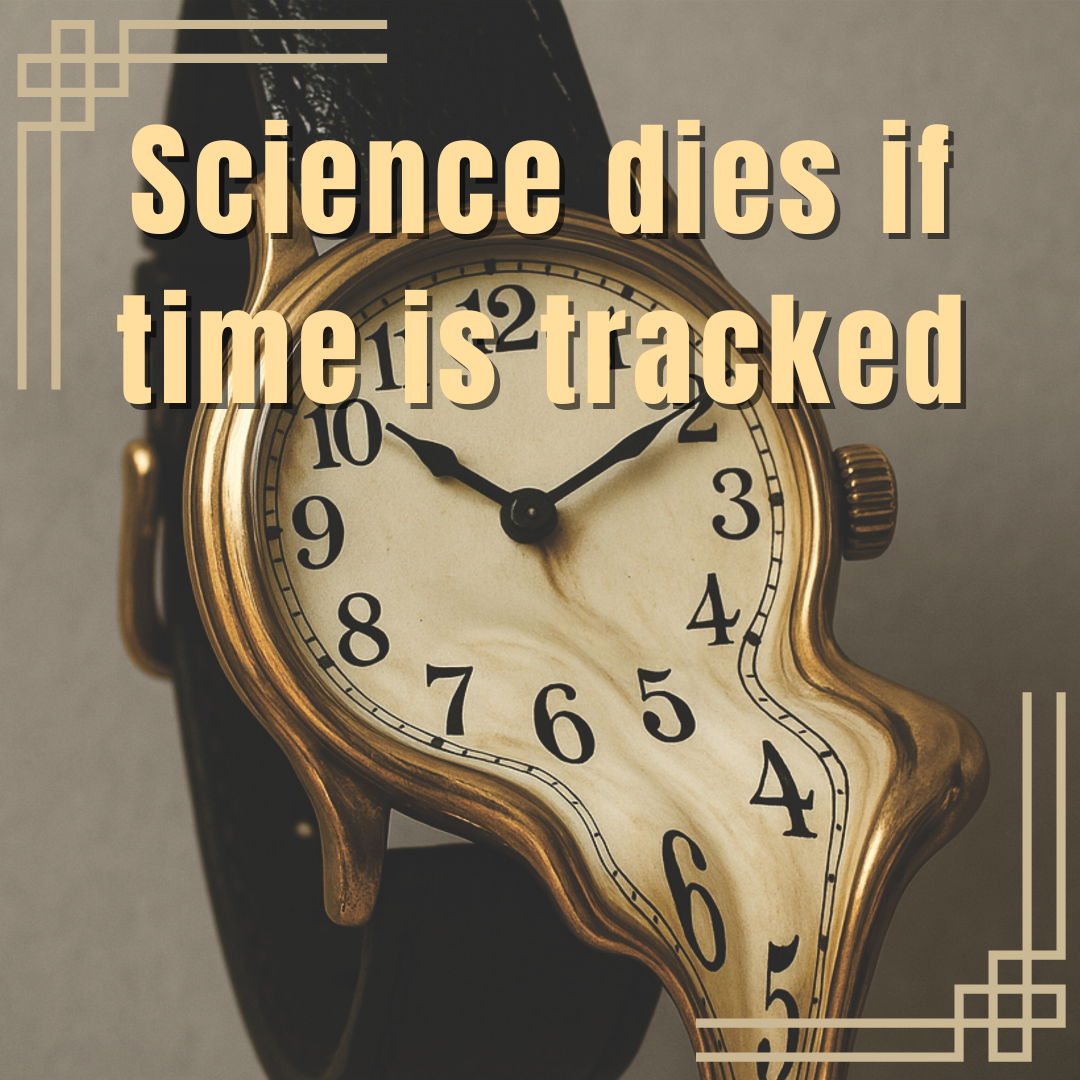
The rulings of the European Court of Justice and the Federal Labor Court on mandatory working time recording marked a turning point for universities because they make it clear that higher education institutions must also introduce reliable systems. For us as the Federal Association of Doctoral Candidates, this is an important step because many young researchers work under conditions where overload remains invisible and protective mechanisms are lacking. Nevertheless, there are still widespread discussions about whether and how working time recording can be implemented. Some researchers even say that time recording would kill academic freedom. We would therefore like to gather a few arguments here and invite you to join the discussion on this topic.
It is the law!
The simplest argument in favor of working time recording is legal in nature: every employer is legally obliged to record actual working hours. This has been confirmed by both the European Court of Justice (2019) and the Federal Labor Court (2022). This should put an end to the debate, as the rules are now clearly defined. However, it is once again apparent that researchers at universities – as was already the case with laws on fixed-term employment contracts (WissZeitVG) – seem to be a special case. This is because many universities have not yet introduced working time recording for researchers.
Is the freedom of science endangered?
Perhaps this reluctance stems from a fear that such working time recording would restrict academic freedom. Science cannot be squeezed into an eight-hour day, and researchers do not want to have to start at 8 a.m. or finish at 6 p.m. Research requires flexible working hours, but that does not mean that researchers should be structurally required to work unpaid overtime. If animal experiments require overtime over several weeks, time compensation concepts must be developed. Without working time recording, however, such requirements cannot be identified. At the same time, practical experience shows that freedom without protective mechanisms quickly turns into self-exploitation and is therefore detrimental to both health and the quality of research. Smart time recording is therefore not a control instrument, but a tool that secures freedom by making workloads visible and enabling fair compensation arrangements.
Time tracking as protection against burnout
Numerous studies and personal experience show that research is not an easy job that you can simply put aside after eight hours. Experiments sometimes require additional time in the laboratory because the laser only works after four hours of adjustment, the deadline for the journal is tomorrow evening, or 50 exams need to be corrected as quickly as possible. Simple time tracking that shows whether working hours are still within the intended range or already exceeding it can help to highlight overload and encourage people to consciously plan compensatory time off. At the same time, it creates a basis for no longer individualizing structural problems, but rather addressing them institutionally. It reminds us that good research requires sustainable working conditions and that self-care is not a luxury, but a prerequisite for scientific quality.
Fear of increased bureaucracy and administrative burden
The antithesis of scientific free thinking is bureaucratic administration. Anyone who sits on a university senate will quickly hear the familiar arguments. “Less administration saves money, speeds up processes, and keeps science free from unnecessary constraints.” However, this logic often leads to the dismantling of precisely those structures that are intended to protect employees. As a result, the protective mechanisms lose their effectiveness. When a staff council insists that positions must be advertised in order to ensure fair procedures, it often encounters resistance from managers who want to “hire someone quickly” or appoint a specific person – as if labor law could simply be ignored in an academic context. But it is precisely this flexibility that masks the enormous difference between paid and actual working hours, which remains invisible without time recording. It is not about control, but about fairness: only when workloads become visible can universities take responsibility and create working conditions that do not jeopardize academic freedom, but rather enable it.
What are your opinions on this polarizing topic? Do you have time tracking at your university or research institute? If so, please tell us how much bureaucracy you have to deal with.